Start by Topic
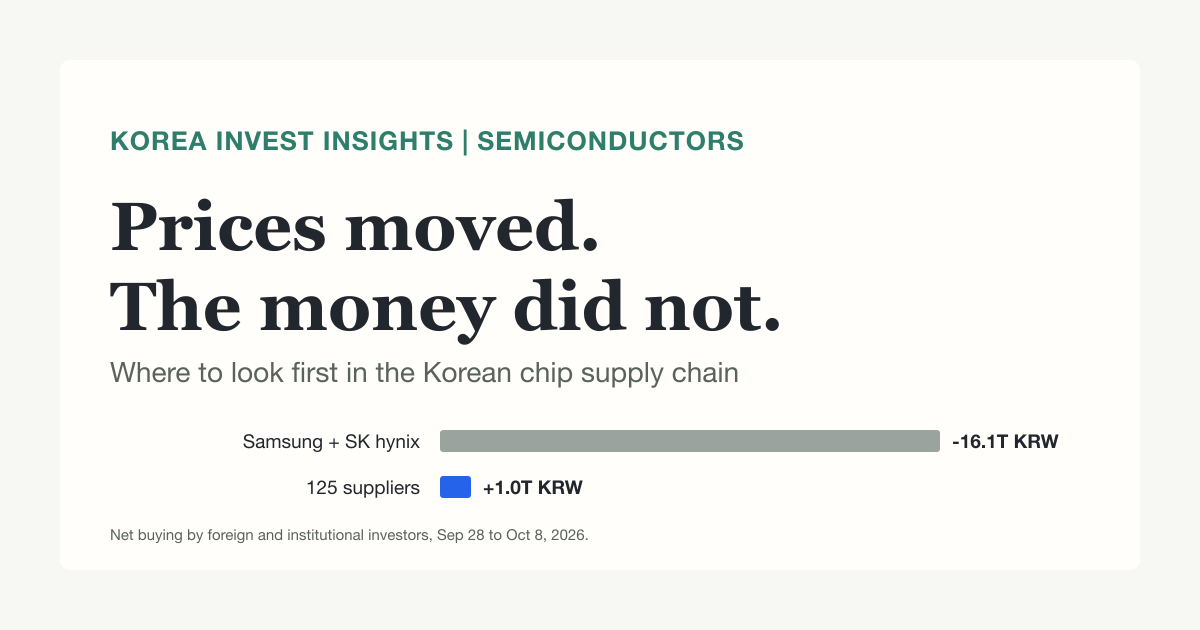
11 research hubsHBM & KOSPI
Samsung, SK hynix, HBM market share and Korea's memory cycle
AI Memory Dashboard
Samsung Electronics, SK hynix, HBM earnings and Korea memory-cycle dashboard
AI PCB & Substrate
FC-BGA, CCL, Samsung Electro-Mechanics, Daeduck, Pamicell
Humanoid & Robotics
SPG, Robotis, Rainbow Robotics, Korea robot value chain
Korean Financials
Meritz, Kiwoom, KB, Shinhan, KIH, KakaoBank, Toss
K-Beauty
Olive Young, PharmaResearch, APR, Medicube, K-beauty stack
Korean AI Companies
Korean AI ecosystem map and equity exposure
Semi Equipment & IP
Korean semiconductor equipment makers and IP plays
Exclusive Analysis
Proprietary screens, ETF flow, real-money flow and market-structure work
For Foreign Investors
How foreign investors access Korean stocks (KOSPI / KOSDAQ)
Daily Market
Day-by-day Korean market flow and event coverage
Samsung Electronics' October 13 Selloff: Memory Competition, a Demand Gap, and What a Rebound Must Confirm
A cross-asset review of Samsung Electronics' 7.39% selloff across stocks, bonds, currencies, derivatives, Japan, and Taiwan. It separates CXMT's 4F² technology announcement from volume production and sets out what would confirm a technical rebound or a trend reversal.
Korea Quality Re-Rating Watch 2026-10-13: Micro Contact Sol, Pan Ocean
KOSPI in Bear regime, 5-day −13.1%. Smart money absorbs Micro Contact Sol (098120), Pan Ocean (028670), and Seegene (096530) as individuals sell.
Korea Quality Re-Rating Watch Oct 12 — KOSPI Bears, Quality Persists
KOSPI lost 8.8% in five days as bears dominated; Samsung Electro-Mechanics and Pan Ocean lead today's quality re-rating candidate screen.
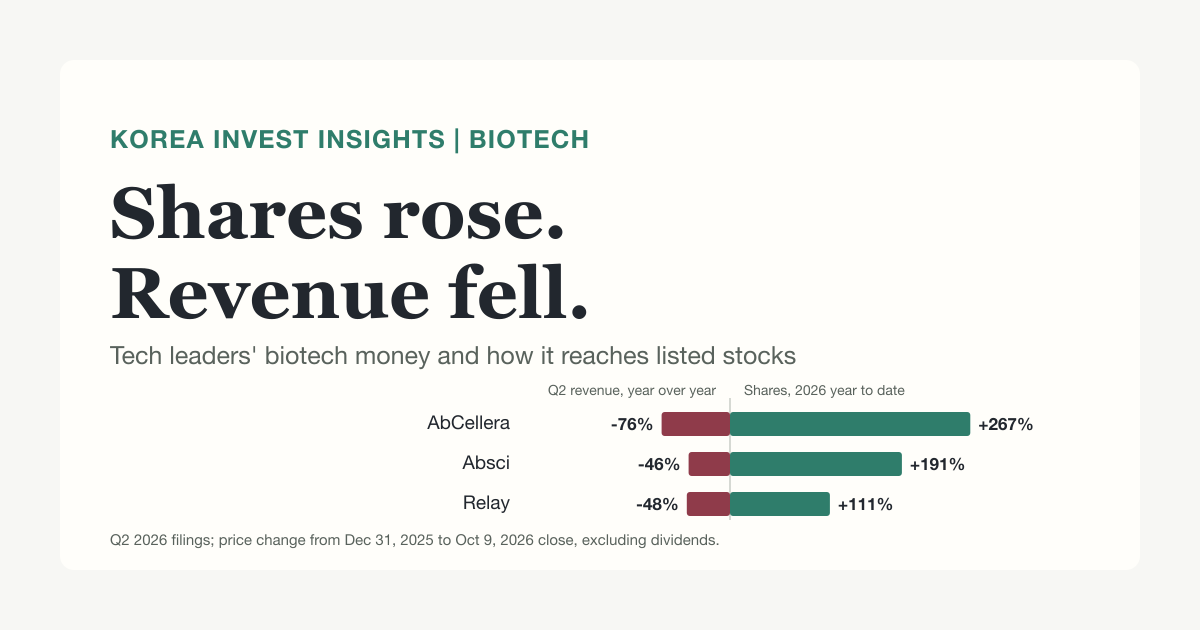
Tech Leaders’ Money in Biotech Reached Public Stocks First Through Acquisitions and Narratives: A Map of 94 Companies and a Review of U.S. and Korean Listed Companies
Of the 94 companies that received biotech investments from tech leaders, only 10 now trade under their own tickers. Private capital reached public markets first through acquisitions and narrative-driven multiples, while earnings remain unconfirmed. This analysis reviews second-quarter results and value relative to cash at U.S. listed companies, alongside evidence for overseas contracts at Korean listed companies.